The Basic Technics of a Steam Engine
Basically, steam is nothing. Steam engines are everything. The engines give steam power: they turn one kind of energy (heat) into another kind of energy (motion). This is interesting, because motion with steam power (sp) is much better than any motion with manpower (mp) or horsepower (hp).Steam power has captured the Dalethians about thirty years ago, and slowly but steady it is clear that the steam power is the only power that will conquer the world. It has ist effects in many layers of the society and daily life, although not every one is affected by steam.
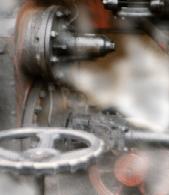
First, you have to have heat. Heat is fire, and fire is oxygen with burning materials (wood, oil, or coal). Heat is dangerous too, so the fire should be kept in a safe place and be guarded constantly.
Second, you need water to make the steam. Hot water turns to steam when it boils. The fire should be near the water.
It is not the water that has the power, but a relation between temperature, pressure and volume. The higher the temperature, the higher the pressure, if the volume stays the same. And steam needs much pressure to give power. The water and the steam should be kept in a boiler, a boiler that can stand high pressure.
To keep control over the pressure you need to control the temperature and the volume. If necessary, you will have to lower the pressure to keep the boiler from exploding. The measuring of temperature and pressure are - in a way - the same. The temperature is measured by measuring the pressure on a liquid in a vacuum; the temperature and the pressure of the outside air are important too.
When you get the steam under pressure, you can lead the steam through pipes to the device that turns the steam pressure into motion. This can be a turbine (rotating) or a cylinder (not rotating). There are many ways to transform a rotation motion into a non-rotating motion, but the best way to keep the power is to stay with the right kind of motion.
If it just wasn’t for the kind of pressure you need:
You can have a steady flow of low-pressure or a pulsing flow of high-pressure. It depends on the actual use which one is best.
When using steam engines you will have to work with the garbage of it: the powerless steam and condenses, the ashes, the smoke, and the likes...
Related topics: